Showing posts with label Asian. Show all posts

Saturday, September 10, 2011

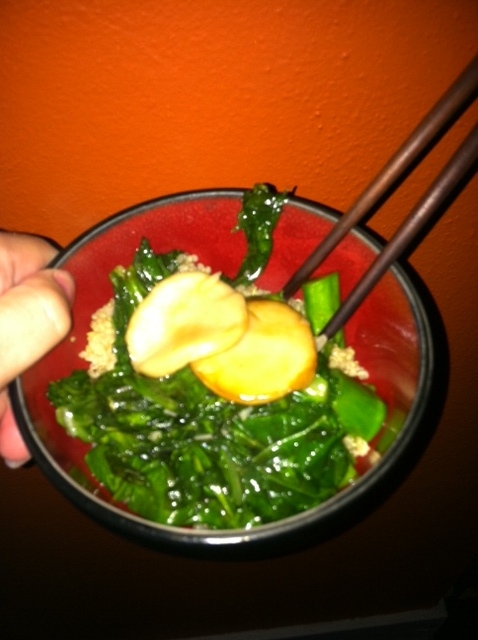
Chinese Broccoli & King Mushrooms in Oysterless Sauce

Last winter a friend and I went to a cooking class by Tien Douglas through Urbana Adult Education. In the class, Tien introduced me to several vegetarian products sold at Far East Grocery, including a vegetarian version of oyster sauce, from Oriental Mascot foods. This website sells it if you're inclined to buy. The class also introduced me to the king mushroom that when sliced thin, has a texture similar to abalone.

Chinese Broccoli & King Mushroom in Oysterless Sauce (serves about 4)
  • 2 king mushrooms, sliced thin, caps removed
  • 1 bunch Chinese broccoli, chopped, stems and leaves separated
  •  Cooking oil
  •  1/2 C oysterless sauce
  • splash of sesame oil
  •  3 cloves garlic, minced
1. Heat the oil in the wok over medium high heat. Add the mushrooms, stirring frequently. Cook until the mushrooms are slightly browned.
2. Add the Chinese broccoli stems, oysterless sauce, and splash sesame oil. Cook for a few minutes, add a bit of water to soften the stems if needed.
3. When stems are nearly cooked through, add the leaves of the Chinese broccoli and the garlic. Stir frequently, adding more sauce if necessary.
4. Serve over rice or noodles if desired.
                                                       King Mushroom, Whole

                                                           King Mushroom, Sliced

  Veggie Oyster Sauce...What would a veggie oyster pearl be like? A lentil? Some other legume?

Kitchen Notes: Thin sliced king mushrooms cook quickly and they don't reduce as quickly as shiitakes, portabella, or other common mushrooms. Add the garlic earlier if desired--I like mine fairly raw tasting in this dish.

Verdict? A very tasty quick, easy meal. The veggie oyster sauce has a nice smoky aroma and flavor with a lot of earthiness to it. The king mushrooms have a satisfying texture and the Chinese broccoli a lot of pleasant, mustardy/bitter flavor. I made the mistake of serving over quinoa the first time, since I already had some made, and it was too bitter with the bitter broccoli. Plain rice would be great, and served over noodles was yummy. Enjoy!
                                                                Over noodles

Saturday, August 27, 2011

Long Beans with Chili-Garlic Sauce

Wandering the farmer's market, we stumbled upon something called Chinese long beans. I'd never seen them before, and since I'm usually enthusiastic about most produce, I thought I'd give it a go. When I say long, I mean long. See here:
Be forewarned: this veggie does not achieve the esteemed status of asparagus or broccoli in my opinion, but the sauce it's stirfried in is quite yummy. The recipe for the sauce comes from the March-April 2010 issue of Cook's Illustrated. The recipe has been mildly tweaked. The original recipe calls for broccoli, which I highly recommend.


Long Beans with Chili Garlic Sauce (serves 3 as a main dish)
  • 1 1/2 lbs Chinese long beans, washed, trimmed and cut into inch-and-a-half pieces
  • 1/4 C vegetable or chicken broth
  • 1 Tbs dry sherry
  • 2 tsp soy sauce
  • 1 tsp toasted sesame oil
  • 1 tsp cornstarch
  • heaping table spoon of chili-garlic paste
  • 2 garlic cloves, very finely minced
  • 1/2 tsp red pepper flakes or red pepper powder
  • 1 tsp, plus 1 Tbs vegetable oil (peanut would probably work well too, but be advised that you may taste the peanut a bit)
  • 1/4 tsp sugar
  • Cooked rice
  • Chopped green onion for garnish
1. Whisk together the broth, sherry, soy sauce, sesame oil, cornstarch, and chili-garlic paste.
2. In a separate bowl, mix together the  garlic, red pepper, and 1 tsp oil.
3. Heat the remaining Tbs oil in a wok on high heat. When just beginning to smoke, add the beans and sprinkle with the sugar, stirring constantly. Cook for about 3 mins, until the beans begin to wither but maintain their crispness.
4. Add the garlic mixture, incorporate well, cook for <30 secs. Don't let the garlic burn. 
5. Add the broth mixture, stir constantly, as broth thickens, about 45 secs. 
6. Serve over rice and add green onion for garnish.
                                                 This was not an easy dish to photograph!

Kitchen Notes:BE CAREFUL INHALING WHEN MAKING THIS DISH! It is very spicy, and will make you cough. I like my food spicy, but this meal will still have a lot of flavor if you half the heat. I used basmati rice, simply because I had some to use up, but I don't recommend it, as the gentle flavors of the rice get lost in the heat of the sauce. I think that yaki soba noodles may be beautiful here, and will probably do that with some of the leftovers. The raw beans have a bitter smell when cut, so I imagine the sugar sprinkling is an important step to limit bitter flavor in the finished product.


Verdict? I am not usually texture averse, but the beans were too chewy and squeaky for me. I think they'd work better in a meal where they weren't the focal point, but mixed with many other vegetables. The flavor of the sauce, is terrific, and I can say from experience, goes great with broccoli. I think that typical green beans would work fine too--the beans absorbed the sauce perfectly.

Saturday, August 13, 2011

A Trio of....Cucumber Salads, Part III: Korean Spicy Cucumber Salad

 Welcome to part III of cucumber salads! Occasionally I get very ambitious and make the Korean dish bi bim bop. This little salad is a mix in or banchan for this dish. This salad, while delicious, it rather spicy and super garlicky. Just a few slices will do. If you do incorporate it into bi bim bop, the flavors will soften considerably.

This recipe comes from a favorite of mine, the cookbook Dok Suni, by Jenny Kwak and Liz Fried. I would check it out from the library for months at a time. I finally broke down and bought it.


Spicy Korean Cucumber Salad (Oye Moochim) (serves 4 or more)
  • 1 cucumber, prepared as written here 
  • 1 1/2 Tbs red pepper flakes, or more
  • 1 Tbs rice vinegar
  • 1 tsp sesame salt
  • 1 tsp very finely minced garlic
  • 1 tsp sesame oil
  • pinch brown sugar
  • salt
1. Mix together the red pepper flakes, vinegar, sesame salt, garlic, sesame oil, and sugar so that it makes a paste. Combine with the cucumber, Mix thoroughly. Serve chilled. Keeps fresh for a week. Will actually keep longer, but won't taste as yummy.  

                                                 Served with my rescued noodles
Kitchen Notes: I've seen sesame salt defined two ways: 1) a combination of pulverized sesame seeds and salt; 2) Pulverized toasted sesame seeds. Truthfully, this time around I didn't feel up to grinding the sesame seeds, so I omitted it. I've included a graphic of the red pepper flakes below. They are used a lot in Korean cooking. I keep mine refrigerated as they seem to get moldy very fast.

Verdict? Little goes a long way. Strong bite from the garlic. Strong heat from the red pepper. Refreshing cukes. Give it a try.

Tuesday, August 9, 2011

Deconstructed Sushi Salad

Do you ever eat a maki roll, just to have it fall apart all over your plate? This recipe captures this.Joanne from Eats Well With Others posted a scrumptious looking recipe for a veggie sushi salad. I loved the idea--I've always been compelled to try to make sushi, but have been too lazy. I figure a restaurant can do superior job. This took the complex work out of sushi, maintaining the flavors. I liked the concept of Joanne's recipe, but I changed the flavors to suit my taste. Additionally, it gave me an opportunity to try a sushi salad dressing featured in Moosewood Restaurant New Classics. The dressing recipe is slightly adapted from Moosewood's recipe, and the salad recipe was inspired by Joanne's recipe.

My favorite roll, as I am a sushi poser who doesn't eat dish, is the AAC roll (avocado, asparagus, and cucumber). Because it's not quite the right season for asparagus, I had to modify a bit.


Deconstructed Sushi Salad (serves 4-6) 
Sushi Dressing (makes between 3/4 C-1 C)
  • 1/2 C rice vinegar
  • 2 tsp wasabi powder
  • 1 tsp sugar
  • 2-3 Tbs soy sauce
  • 2-3 tsp minced ginger
  • toasted nori 
1. Mix together all ingredients except nori. Snip the nori into small pieces and incorporate into the dressing. Set aside.

Sushi Salad
  • 2 C uncooked sushi rice
  • 1 small cucumber, diced
  • 1 avocado, diced
  • 4-6 medium shiitake mushrooms, stemmed and diced
  • 1/2 of the dressing made above
1. Rinse the sushi rice several times. Place in saucepan with 2 C water, bring to a boil. Cover, reduce heat to low. Cook for 15 mins, remove from heat. Let steam, covered, away from heat for 10 more mins. Allow rice to cool to room temp or place in fridge.
2. Place the mushrooms in a microwave safe container, cook, checking every 30 seconds, until most of the liquid is removed. This should take about 90 seconds. Be careful not to let the mushrooms burn.
3. Pour half of the dressing over the rice, mix well. Add the mushrooms and cukes, mix well. Dice and add the avocado just before serving, mix well. Serve, with dressing and soy sauce for dipping. Enjoy! Stays fresh for up to 3 days.

Kitchen Notes: I used seasoned rice vinegar, so you may need more sugar or other seasonings to adjust. Real wasabi powder (see below) is far milder than that served in most Japanese restaurants, so if you're crazy about the flavor of restaurant wasabi, get tube wasabi from an Asian market. The original recipes for both Joanne and the Moosewood cookbook both recommend pickled ginger, I used fresh as that's what is on hand.When you initially mix the wasabi and rice vinegar, it will look vile. Don't worry, it won't look like this for long.

                This used real wasabi, rather than the horseradish wasabi we tend to be familiar with
                                                               It's sort of gray

Verdict? I was surprised at how well this approximated the flavor of sushi, minus the tight structure. Unlike traditional sushi, the rice does not dry out very quickly, it remains fresh the next day. This recipe invites a lot of flexibility with ingredients, and would likely be great with fish on top. Dipping each chopstickfull in a bit of soy sauce is simply yummy.

Monday, August 8, 2011

A Trio of....Cucumber Salads, Part II: Japanese Cucumber Salad

I don't know how long I've been making this recipe. It's another one slightly adapted from Sundays at Moosewood Restaurant. I will tell you, that it's very important to adequately cook the sake used in this recipe. It is not OK to get tipsy off your food. I've learned this from experience.


Are you familiar with the Korean concept of banchan with meals? It's the idea of serving very small side dishes with your meal, almost like an amuse bouche, but served to accompany the meal, not before. Served in this fashion, this works quite well, but by itself, the flavors are overwhelming.

Without further ado, round II of cucumber salads.


Japanese Marinated Cucumbers (Su-no-Mono) with Sake Noodles 
For the cucumbers:
  • 1 large cucumber, prepared as outlined here
  • 1/4 C sake, boiled
  • 1/3 C rice vinegar
  • 3 Tbs soy sauce
  • 2 Tbs mirin
1. Mix the sake, rice vinegar, soy sauce, and miring together. 
2. Add to cucumbers, allow to chill for a couple hours. 

Kitchen Notes: As mentioned above, the flavors in this become very concentrated, it serves better as almost a  relish, garnish or condiment. For a very light meal, this goes well on somein noodles, or as a side for my deconstructed sushi salad, coming up next.

Verdict? Truthfully, I'm not as in love with this salad as I once was. The sake imparts a slightly floral flavor, which is an acquired taste. As a way to flavor other dishes, though, it works great.

Sunday, July 17, 2011

Recipe Mash-up: Country Style Tofu & Shiitake Mushrooms with Garlic Bok Choy

In recipe mash-up I take 2 different recipes and turn them into 1 dish. I made this because I had baby bok choy and cooked rice that required attention. The mushroom recipe comes from one of my favorite food blogs, Closet Cooking, with small modifications by me. The Country Style Soft Tofu and Garlic Bok Choy recipes are companion recipes from Moosewood Restaurant's cookbook Cooking for Health. I recommend any of the Moosewood cookbooks, however, this one is especially outstanding as it has revised and improved many dishes from previous cookbooks, enhancing both nutrition and flavor. I've separated the 3 recipes out, mainly to confuse people, but also to illustrate that they can easily be made individually for different effect. The final result, discussed more below, is a nice blend of American Chinese takeout, and more traditional Chinese dishes.


Seasoned Shiitake Mushrooms

  • Vegetable oil
  • 4 oz shittake mushrooms, stems removed and cut into thin slices
  • 2 cloves garlic, minced
  • 2 tsp fresh ginger, minced
  • 1/4 C dry sherry
  • 1 Tbs soy sauce
  • 1 generous tsp garlic-chili sauce
1. Heat the oil on high heat
2. Sautee the mushrooms for 4-5 mins, stirring frequently
3. Add garlic & ginger, sautee for a minute
4. Deglaze the pan with the sherry
5. Add soy sauce and chili sauce, reduce heat to desired thickeness
6. Add sesame oil
7. Remove from pan and set aside (Note: you can use the same pan for the bok choy if desired)

Country Style Soft Tofu:
  • 1 cake soft tofu
  • 1 C water
  • 1-2 Tbs soy sauce
  • 2 tsp dark sesame oil
  • 1 tsp rice vinegar (cider vinegar would also work well)
  • 2 Tbs corn starch
1. Gently cut the tofu into cubes. Curse tofu out when it breaks all over your cutting board.
2. Mix together water, soy sauce, sesame oil, vinegar & cornstarch
3. Bring to a boil, ensure cornstarch is thoroughly mixed into sauce
4. Bring to a simmer, stir until thickened
5. Add tofu, gently stir (use a rubber spatula or wooden spoon--try fruitlessly not to let tofu break)
6. Allow to sit on low heat, stirring occasionally   

Bok Choy with Garlic
  • Vegetable oil
  • 3 heads baby bok choy (huge variation in size--mine were the equivalent of one full-sized head of bok choy)
  • 1/2 C water
  • 3 Tbs soy sauce
  • 1 tsp dark sesame oil
  • 8 garlic cloves (ya know, to keep the vampires away), minced
  • Green onions, sliced
  • Cooked rice
1. Clean the bok choy well (little critters like to crawl among the leaves). Cut into 1/2 inch slices. Discard the tough bottom part.  Keep the leafy portion separate.
2. Mix together the  water, soy sauce, and sesame oil
3. Heat the vegetable oil hot, hot, hot in a wok
4. Add garlic, stir for a minute, do not let that garlic burn
5.  Add bok choy stems, stirring constantly. You may need to turn down the stove to medium at this point, depending on how well your cookware retains heat
6. After 3 or so minutes, add the soy sauce mixture and bok choy leaves. Stir until the bok choy is well-coated and the leaves have wilted. Turn off heat. 


The big picture:
1. Put rice in a bowl
2. Add tofu and bok choy to your liking
3. Sprinkle a few of the mushrooms to your liking (they are salty and heavily seasoned--a little go along way)
4. Sprinkle on some green onions for flavor and texture.


Verdict? Very tasty, but one question...why did I make this in the summer? This is such a fall/winter dish! The whole dish worked together very well, but I'll comment on each item individually. The green onion does help pull together the meal, so think of it as an ingredient, not a garnish.
    Mushrooms:Nice chewy texture and concentrated flavor. I'll definitely make these as an add-on to my next attempt at Bibimbop. These would also be exceptional on a salad or in kimbap or a veggie maki roll.
     Tofu: The sauce is reminiscent of take-out (in a good way). It reminds me a bit of mopo tofu. I'm not  I don't often seek out soft tofu, but in this meal, it works.
     Bok Choy: This is very simple, but very good. A friend of mine from China runs a small Chinese that caters to both Americans and Chinese students. This dish is very similar to many of her traditional menu items. The sauce is far runnier than the sauce of the tofu, but this is typical in traditional dishes. The combination of both the thick sauce with the tofu and thin sauce of the bok choy unites well with the rice.
Saturday, July 16, 2011

Green Green Onion & Ginger Noodles: Updated 08/12/2011

This post marks my first foray into a food-blogging tradition that I love, Presto Pasta Nights. This week's PPN roundup is hosted by the darling Debbi Does Dinner. Because this is my 1st time with PPN, my apologies to you dear PPN followers if I goof up!

I borrowed from the library (Hi, Mom!) David Chang's Momofuku Cookbook, part traditional cookbook, part history tome, and part essay. Mr. Chang is apologetically unsympathetic to vegetarians, but his ginger scallion noodles appeal to us herbivores. He states that this dish is an homage, no, a rip off of a cheap & filling Chinese restaurant in NYC, so I figured it was only fair to do the same. The ginger scallion sauce recipe is from Chang's cookbook, with minor modifications by me to accommodate what I had in my kitchen, the rest of the stir-fry inspiration arrives courtesy of the contents of my fridge:
 
     2 bunches sounds like a lot of onions...1/2 ginger sounds like a lot of ginger. But it works.
                                                         Love all the green...so pretty!

                                                    Like to keep these handy in the fridge!
Green Green Onion & Ginger Noodles (serves 3-4)
  • 3 single-serve packages yakisoba noodles
  • 1/2 lb seasoned firm tofu, cut into 1/2 inch cubes
  • 1 small-med zucchini, diced
  • 1 head baby bok choy, sliced, leafy greens separated from stems
  • 1 green  pepper, diced
  • 1 batch ginger scallion sauce (recipe below) 
  • 2 cloves garlic, diced
  • vegetable oil
  • soy sauce to taste 
  • water as needed
1. Assemble the ginger scallion sauce. Allow to sit in fridge to let flavors mingle, between 20 mins, and oh, 20 hours. It loses potency if not used in a day.
2. Heat a bit of veggie oil in a wok on med-high heat, once hot, toss the garlic a bit til aromatic.
3. Add the tofu, cook for a few minutes, stir often.
4. Add the zucchini & boy choy stems, cook a few more minutes, stir often.
5. Add the pepper, stir again.
6. After a minute or 2, add the noodles and bok choy leaves. Use tongs to help loosen noodles, add a bit of water to loosen the noodles if needed.
7. Once the noodles are loosened, stir-fry for 1-2 mins. 
8. Add the ginger scallion sauce and cook for another min or two more. 
9. Inhale the lovely ginger smell. Enjoy! If you're not enjoying, add some soy sauce to taste.


Ginger Scallion Sauce:
  • 2 med bunches green onions, chopped small. Don't discriminate--use both the green & white parts
  • 1/2 C minced fresh ginger
  • 1/4 vegetable oil
  • 1 Tbs soy sauce
  • 1 Tbs rice vinegar
  • 1 Tbs dry sherry
1. Mix everything together. Let the flavors mingle and get to know each other.  

Verdict? I'm a firm believer in this sauce. It's quick, economical, and packs a lot of flavor, it's easy to keep handy in the fridge. I love the flavor and texture of the yakisoba noodles, and the sauce hugs them perfectly. The ingredients of the stirfry are really secondary to the sauce, so have fun with whatever's in your fridge, and let me know how it turns out.(Update 08/12/2011: I made this again in a desperate attempt to revive a batch of noodles gone wrong. I didn't have dry sherry, so I substituted with  soju, a Korean spirit similar to vodka, with great results. I'm happy to report the noodles were yummy)